Anzy Lee
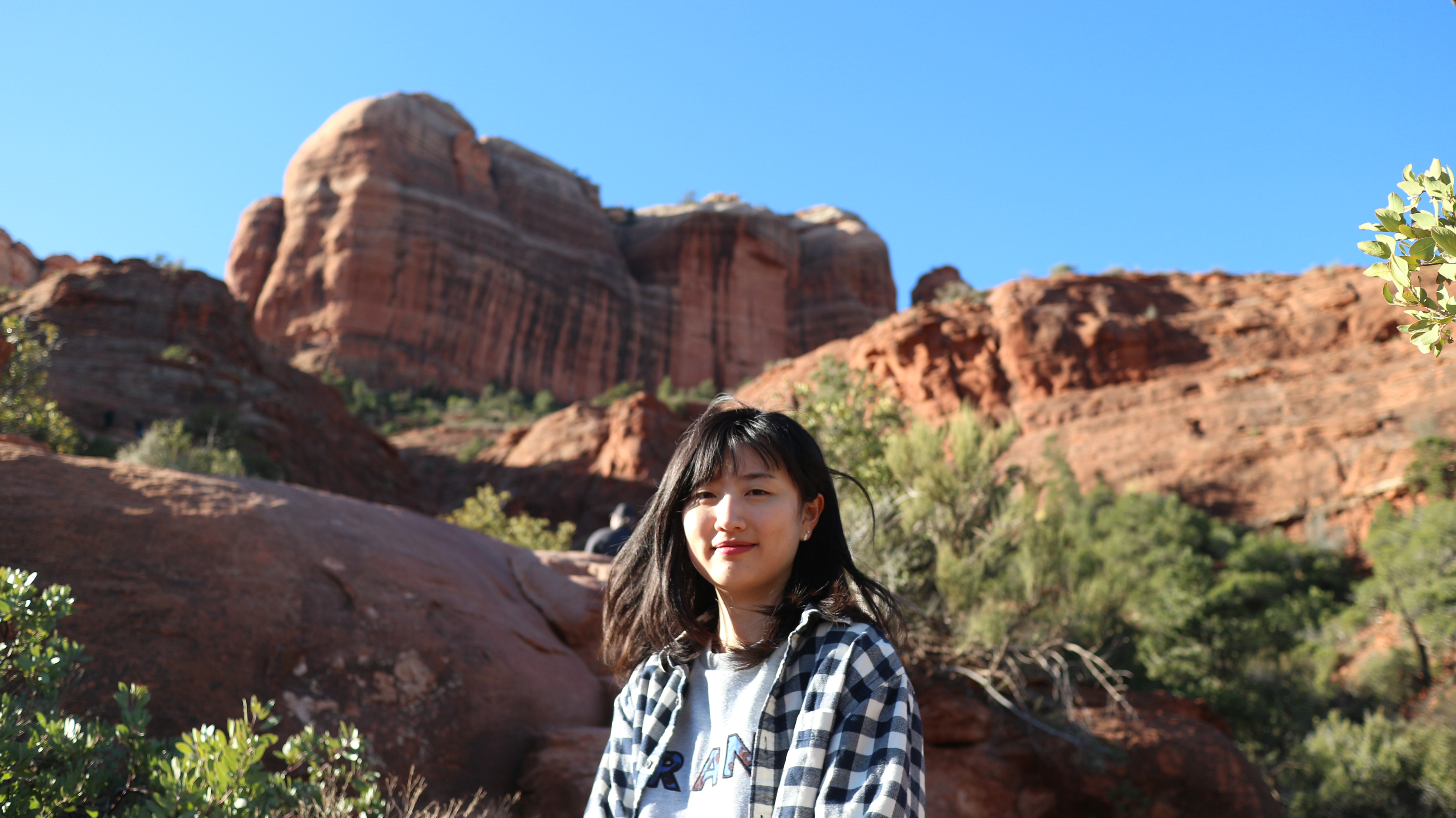
Welcome to the Anzy's homepage!
Welcome to Anzy’s homepage
Research Scientist
Department of Civil and Environmental Engineering, Utah State University
Contact
anzy.lee@usu.edu
Short bio
A scientist with a passion for environmental hydrodynamics, fluvial geomorphology, surface & groundwater interactions, sediment transport, aquatic ecosystem, and watershed hydrology. My mission is to understand watershed dynamics and nteractions to enhance ecosystem function and resilience.
Pulibcation
- A. Lee, J. Castejon, N. K. Patterson, R. Diehl, C. B. Phillips, B. A. Lane, G. B. (In Preparation) Probabilistic quantification of within-reach hydraulic geometry variability.
- J. Castejon, A. Lee, N. K. Patterson, B. A. Lane, C. B. Phillips (Submitted) Leveraging High-resolution Topography to Advance Parsimonious Reach-scale Flood Inundation Mapping.
- A. Lee, B. A. Lane, G. B. Pasternack (Submitted) RiverSTICH: A modular synthetic 3D channel terrain generator from sparse transect data.
- A. Lee, B. A. Lane, G. B. Pasternack (2025) Spectral Slope and Coherence Quantitatively Summarize Nested Topographic Variability Patterns in Rivers. River Res. Applic., 41: 1093-1103.[Link]
- A. Lee, B. A. Lane, G. B. Pasternack (2023) Identifying key channel variability functions controlling ecohydraulic conditions using synthetic channel archetypes. Ecohydrology. e2533 [Link]
- A. Lee, A. Aubeneau, M. B. Cardenas, X. Liu (2022) Hyporheic exchange due to cobbless on sandy beds. Water Resour. Res. 58, e2021WR030164 [Link]
- A. Lee, A. Aubeneau, M. B. Cardenas, X. Liu (2021) Hyporheic Exchange in Sand Dunes Under a Freely Deforming River Water Surface. Water Resour. Res. 57, e2020WR028817 [Link]
- A. Lee, A. Aubeneau, M. B. Cardenas (2020) The Sensitivity of Hyporheic Exchange to Fractal Properties of Riverbeds. Water Resour. Res. 56, e2019WR026560. [Link]
- A. Lee, J. W. Geem, K. D. Suh (2016) Determination of near-global optimal initial weights of artificial neural network using harmony search algorithm: Application to breakwater armor stones. Appl. Sci. 6(6), 164. [Link]
- A. Lee, S. E. Kim, K. D. Suh (2016) An easy way to use artificial neural network model for calculating stability number of rock armor. Ocean Eng. 127, 349-356. [Link]
Conference Proceedings
- J. Stieve, B. A. Lane, A. Lee (Submitted to ISE 2026) Generating Syntetic Terrain Models from Sparse Historic Datasets for Ecohydraulic Assessment.
- A. Lee, J. Castejon, N. Patterson, R. Diehl, C. B. Phillips, B. A. Lane (Accepted to AGU 2025. Oral Presentation) Probabilistic quantification of within-reach hydraulic geometry.
- J. Castejon, A. Lee, B. A. Lane, C. B. Phillips (2024) Accurate River Channel Representation Within a HAND-y Method for Flood Inundation Mapping., AGU 2024 Fall Meeting, Dec 2024, Washington D.C., United States.
- A. Lee, B. A. Lane, G. B. Pasternack and S. Sandoval-Solis (2021) Identifying key geomorphic parameters characterizing eco-hydraulic responses of river channels using RiverBuilder, AGU 2021 Fall Meeting, Dec 2021, New Orleans, United States
- A. Lee, M. B. Cardenas, A. Aubeneau (2018) Investigation of hyporheic exchange in channels with high Froude Number flows: the importance of free surface water elevation changes, AGU 2018 Fall Meeting, Dec 2018, Washington, D.C., United States
- A. Lee, A. Aubeneau (2017) 3D Numerical Modeling of Hyporheic Exchange Processes in Fractal Riverbed’ AGU 2017 Fall Meeting, Dec 2017, New Orleans, United States
Digital Products
- A. Lee, B. A. Lane (2024). HAND-FIM Assessment Tools [Python]. GitHub. [Link]
- A. Lee (2024). Width Extraction Tools [Python]. GitHub. [Link]
- A. Lee (2024). Habitat Analysis Tools [Python]. GitHub. [Link]
- A. Lee (2024). Spectral Analysis Tools for Geomorphic Variability Functions [Python]. GitHub. [Link]
- A. Lee (2020). hyporheicScalarInterFoam [C++, OpenFOAM]. HydroShare. [Link]
Teaching and Mentoring
- Lab Instructor and Grader, Elementary Hydraulics Laboratory, Purdue University (Fall 2019)
Awards and Service
- Peer Reviewer, River Res. Applic., Earth Surf. Process. Landf., Water Resour. Res., J. Hydrol., J. Hydraul. Eng.
- Delleur Award, Purdue University (2017, 2018)
- Merit Scholarship (Top 5%), Handong University (2012)